Upgrading the energy performance of a historic property presents a unique set of hurdles. You must meet stringent modern building regulations while carefully preserving the architectural integrity of the site. Finding this delicate balance requires technical expertise, creative problem-solving, and a deep respect for historic fabric.
Consult Group recently partnered with Aaron Brooks to tackle exactly this type of challenge. We delivered design stage SAP assessments and Water Efficiency Calculations (WECs) for a complex material change of use. The project involved converting two existing residential units into a single, cohesive dwelling within the East Wing of a magnificent Grade I listed building.
In this post, we will explore the specific constraints our team faced during this conversion. We will detail the targeted energy strategy we developed to overcome these hurdles. Finally, we will highlight the measurable improvements achieved, proving that sustainable design and heritage preservation can successfully go hand in hand.
The Challenge of Heritage Assets
Working on a Grade I listed building means you operate under the strictest conservation guidelines. You cannot simply apply standard modern insulation techniques or swap out old fixtures for highly efficient alternatives. Every proposed change must respect the historic character of the property.
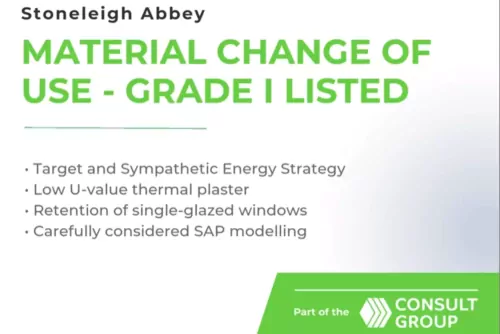
During this East Wing conversion, the architectural constraints severely limited our options for thermal upgrades. Conservation requirements mandated the retention of the original single-glazed windows. Furthermore, the existing historic fabric meant we had extremely limited scope to upgrade the existing walls and floors using traditional methods.
These restrictions significantly constrained our ability to meet the thermal performance standards typically required for a modern residential conversion. Single glazing and uninsulated solid walls are major sources of heat loss. We needed an innovative approach to offset these systemic inefficiencies without altering the building's protected appearance.
Developing a Sympathetic Energy Strategy
Faced with these strict limitations, our team developed a highly targeted and sympathetic energy strategy. We could not rely on broad, sweeping changes to the building envelope. Instead, we had to identify specific areas where we could maximise thermal improvements without disrupting the historic fabric or internal space.
Our approach required a granular analysis of the building's current performance. We looked for opportunities where modern materials could be applied discreetly but effectively. This meticulous planning allowed us to offset the heat loss from the retained single glazing.
Targeted Roof and Wall Upgrades
The core of our strategy focused on the roof constructions and specific internal walls. We recommended comprehensive upgrades to the existing roof structures, adding high-performance insulation where it would not impact the visual character of the building. Because heat naturally rises, securing the roof significantly improved the overall thermal retention of the dwelling.
For the walls, we specified the use of low U-value thermal plaster. We applied this specialised material to the first and second-floor walls. Thermal plaster provides an excellent layer of insulation while mimicking the look and feel of traditional finishes, preserving both the historic aesthetic and the internal floor space.
Detailed SAP Modelling
To prove that our strategy would work, we relied heavily on detailed U-value calculations and rigorous SAP modelling. Standard assumptions often fail when applied to historic buildings. We needed highly accurate data to demonstrate compliance to building control.
Our team carefully modelled the thermal properties of the existing historic fabric alongside our proposed upgrades. This allowed us to predict how the building would perform in reality, rather than just on paper. The design stage SAPs accurately reflected the anticipated as-built performance, giving the client and conservation officers complete confidence in the approach.
Achieving Measurable Improvements
The results of this targeted strategy speak for themselves. Despite the heavy restrictions imposed by the Grade I listing, we achieved a significant leap in energy efficiency. We successfully improved the proposed dwelling’s energy performance rating from an EPC E band up to a solid D band.
This upgrade makes the property tangibly warmer, more comfortable, and cheaper to run for the future occupants. More importantly, it brings the conversion into compliance with modern building regulations without compromising the features that make the building special.
This project clearly demonstrates how thoughtful, energy-led design can successfully bridge the gap between regulatory compliance and heritage constraints. You do not have to sacrifice a building's history to make it fit for the future.
Integrating Water Efficiency Calculations
Alongside the thermal upgrades, we also delivered comprehensive Water Efficiency Calculations (WECs) for the project. Older buildings often feature outdated, inefficient plumbing systems that waste vast amounts of water. As part of the material change of use, we needed to ensure the new single dwelling met modern water consumption targets.
We specified flow restrictors, efficient brassware, and modern sanitaryware that respected the traditional aesthetic of the bathrooms while drastically reducing water usage. This holistic approach ensured the entire property operates sustainably, addressing both energy and water conservation simultaneously.
Expert Support for Complex Conversions
Navigating the intersection of building regulations and heritage conservation is rarely straightforward. It requires a specialist understanding of both historic building physics and modern compliance frameworks. As this Grade I listed project proves, achieving a successful outcome requires careful planning and expert modelling from the very beginning.
If you are working on a listed building or a similarly complex conversion project, we are here to help. Our team has the technical expertise to guide you through the intricacies of SAP assessments, Water Efficiency Calculations, and broader compliance challenges.
Please feel free to get in touch with Consult Group today. We would be delighted to discuss your upcoming project and help you develop an energy strategy that protects the past while building for the future.